

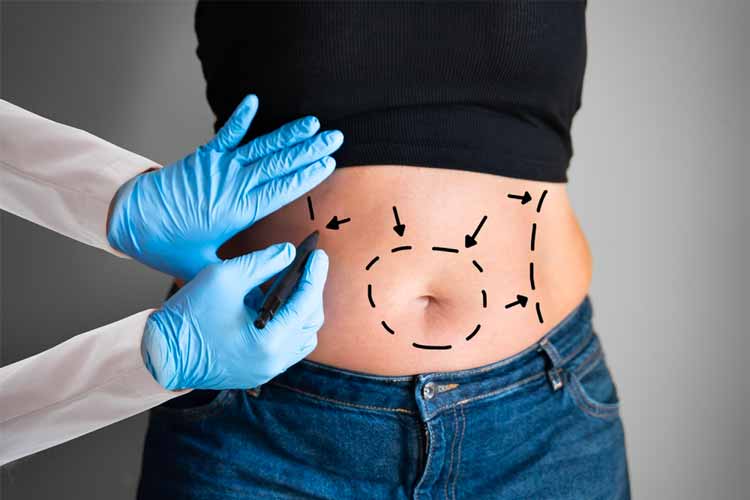
The procedure of liposuction, which removes fat from the body, has been around for decades. Liposuction has evolved significantly over time, making it safer, more effective, and less invasive. This article discusses the history of liposuction and how techniques have evolved to provide patients with better results. The early techniques involved making large incisions in the skin and using a curette, a small, scoop-like instrument, to move fat away from the body.
It was painful, required a long recovery period, and had a high risk of complications. In the 1980s, a French surgeon named Yves-Gerard Illouz developed an innovative technique called the “wet technique.” This method involved injecting a solution of saline and local anaesthetic into the fat before suctioning it out. As a result, fat was easier to remove, bleeding was reduced, and complications were reduced.
Tumescent liposuction
In the 1980s, Jeffrey Klein developed an innovative technique called tumescent liposuction. In this procedure, lidocaine, a local anaesthetic, and epinephrine, a blood vessel constrictor, are injected into the affected area in large quantities. As a result of this solution, the area is numb, bleeding is reduced, and fat is easier to remove. Tumescent liposuction quickly became the gold standard for liposuction procedures. It is possible to remove more fat with less blood loss and a faster recovery time. Many plastic surgeons, including those offering Liposuction Pasadena, use this technique today.
Ultrasound – Assisted liposuction (UAL)
In the 1990s, an innovative technique called ultrasound-assisted liposuction (UAL) was developed. In order to deliver the ultrasound energy, a small incision is made in the skin to insert a special cannula. UAL is particularly useful for treating areas with dense, fibrous fat, such as the back or male breast tissue. It can also tighten the skin in the treated area. However, UAL requires more skill and experience than traditional liposuction. It may have a higher risk of complications such as burns or nerve damage.
Laser – Assisted liposuction (LAL)
In the early 2000s, laser-assisted liposuction (LAL) was introduced. Laser energy is used to melt fat before it is suctioned out. Laser energy is delivered through a small fibre inserted through tiny incisions in the skin. LAL is often marketed as a less invasive alternative to traditional liposuction. It may cause less swelling and bruising and have a quicker recovery time. However, the long-term results of LAL are not as well established as those of traditional liposuction, and it may not be suitable for removing large amounts of fat.
Power – Assisted liposuction (PAL)
To break up fat before it is suctioned out, PAL uses a special cannula that vibrates rapidly. This can make the procedure faster and less physically demanding for the surgeon. PAL may be particularly useful for treating larger areas or patients with denser, more fibrous fat. It may also cause less swelling and bruising than traditional liposuction. Many surgeons offering Liposuction in Pasadena now use PAL in their practice.
Conclusion
Liposuction has come a long way since its early days. Tumescent liposuction, PAL, and LAL are safer, more effective, and less invasive than ever before. If you are considering liposuction, make sure your plastic surgeon is qualified, experienced, and up-to-date on the latest techniques.
