

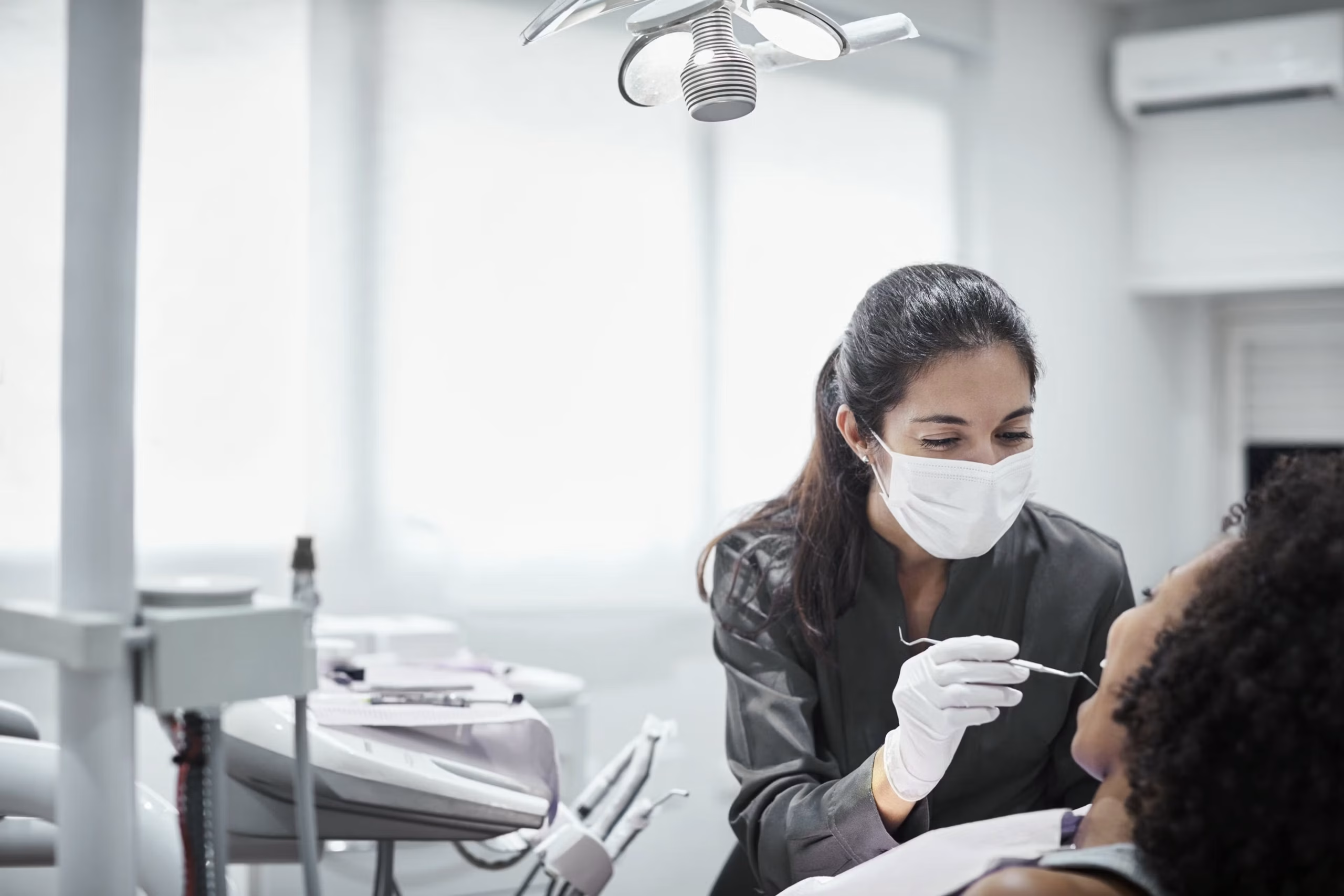
You might be feeling a mix of curiosity and hesitation every time you sit in that dental chair at Fifth Street Dental Care, Dexter MI and see a new screen, scanner, or tool appear beside you. It used to be a simple cleaning and a quick X‑ray, and now there are 3D images, digital impressions, and talk of lasers and same‑day crowns. Part of you is grateful that dentistry is moving forward. Another part wonders what all of this really means for your health, your comfort, and your wallet.end
You are not alone in that tension. Many people nod along when their general dentist mentions “new technology,” yet walk out unsure what actually changed in their care. Because of this, you might be asking yourself a quiet question. How do I know which technologies truly help me, and which ones are just expensive gadgets?
That is where a simple set of questions can steady you. When you know which questions to ask, you turn a confusing conversation into a clear one. The short version is this. If you ask about evidence, safety, cost, alternatives, and how it affects your experience, you will usually get the clarity you need to make confident decisions about any new dental technology.
Why new dental technology can feel exciting and scary at the same time
Modern dentistry has changed quickly. Digital scanners, 3D X‑rays, and new materials can make care faster and more precise. According to the American Dental Association, digital dentistry now touches almost every part of a practice, from imaging to how restorations are made. You can read more about that shift in their overview of digital dentistry and technology.
On the good days, this is reassuring. Faster appointments. Fewer messy impressions. Crowns that fit better. On the hard days, it raises questions. Is this safe for me long term. Is my dentist recommending this because it is best for my mouth, or because the office just invested in an expensive machine. Will insurance cover it, or will I be surprised later.
So, where does that leave you. Somewhere between trust and worry. You want to respect your dentist’s training, yet you also want to speak up for yourself and your family. The key is not to become a dental expert overnight. The key is to have a handful of grounded questions ready any time a new tool or procedure comes up.
Question 1: “How will this technology actually improve my care?”
When your dentist suggests a new scanner, laser, or imaging system, the first thing to understand is how it changes your outcome. You can ask something like, “What will this do for me that your older method could not?”
For example, a digital scanner for impressions might reduce gagging and make a crown fit more accurately. A 3D X‑ray might help find infections or bone loss that a traditional 2D X‑ray might miss. If the answer you hear focuses mostly on speed or convenience for the office, rather than clearer diagnosis or better long term results for you, that is useful information.
This question also opens the door for your dentist to show you images or models and walk you through their thinking. When you see what they see, the technology feels less like a black box and more like a shared tool.
Question 2: “Is this supported by research and standard dental guidelines?”
New does not always mean better. You deserve to know whether a technology is backed by solid research and recognized by professional organizations. You might ask, “Is this approach supported by current studies or guidelines, or is it still considered new and experimental?”
Your dentist may reference studies, continuing education, or recommendations from professional bodies. If you want to explore general background yourself, resources like MedlinePlus dental health information can help you understand common conditions and standard treatments in plain language.
Technology that aligns with evidence based care usually has clear benefits and known limitations. That does not mean every newer option is wrong. It simply means you should understand where it sits on the spectrum from “well established” to “still being studied.”
Question 3: “What are the risks, side effects, or downsides for me personally?”
Every tool has tradeoffs. New imaging might involve different radiation levels. Lasers can reduce bleeding, but may not be ideal for every type of tissue. Same day crowns can be very convenient, but might not be the best choice in every structural situation.
A helpful way to ask is, “If this were your own mouth, what would you be watching out for with this technology, given my history?” This invites your dentist to think about your unique medical conditions, medications, and past dental work. Someone with a history of jaw pain, for example, might need shorter appointments even if a technology allows for more work in a single visit.
If you have concerns about your broader oral health picture, the National Institute of Dental and Craniofacial Research offers clear overviews of many conditions at NIDCR oral health information. Understanding your diagnosis can help you ask sharper questions about which tools are truly appropriate.
Question 4: “How will this affect cost, insurance, and my long term budget?”
Money worries often sit under the surface. You might be nodding along while thinking, “What is this going to cost me, and will my insurance help at all.” Technology can sometimes lower costs over time, for example, by reducing the number of visits, but it can also add new fees.
Try asking, “How does the cost of this compare to the traditional method, both now and over the next few years.” Also ask directly what your insurance typically covers and what your out of pocket estimate might be. Some offices can submit a pre‑treatment estimate so you have fewer surprises.
This is not being difficult. It is being responsible. A trustworthy general dentist will respect that you have a budget and will work with you to prioritize what truly matters for your health.
Question 5: “What are my alternatives if I say no to this technology?”
You always have a choice. Even when a new tool sounds impressive, you deserve to know what happens if you decline it. You might ask, “If I choose not to use this technology, what are my other options, and how do their results compare.”
Sometimes the alternative is a traditional impression, a different type of X‑ray, or a slower multi visit process. Other times, saying no might mean less precise information and a higher chance of needing a repair later. Understanding those tradeoffs helps you decide what feels right for you.
This question also reveals your dentist’s attitude toward collaboration. A supportive dentist will explain your options without pressure. They will respect your decision, even if they share a professional recommendation.
Comparing traditional methods and newer dental technologies
It can help to see the differences between older methods and newer tools in one place. This is a simple comparison to guide your questions.
| Area of care | Traditional approach | Newer technology | What to ask your dentist |
|---|---|---|---|
| Impressions for crowns or aligners | Physical trays with impression material | Digital intraoral scanner | Will a scanner improve fit or comfort for my specific teeth, and is there a cost difference |
| Dental X‑rays | Standard 2D X‑ray films or sensors | 3D cone beam CT imaging | Do I truly need 3D imaging for this problem, and how does radiation exposure compare |
| Crowns and restorations | Lab made crowns over multiple visits | Same day CAD/CAM crowns made in office | Is a same day crown as durable for my situation, or is a lab crown better here |
| Gum treatments | Scalpel surgery and manual instruments | Laser assisted gum therapy | Does laser treatment improve healing or comfort for my level of gum disease |
| Cavity detection | Visual exam and standard X‑rays | Digital detection tools and enhanced imaging | Will this tool reduce the chance of missing decay, or is it mainly an add on |
Three practical steps you can take before your next dental visit
- Write down your main worries and bring them with you
Before your appointment, take a few minutes to note what you are most concerned about. Is it radiation, pain, cost, or something else. Bring that list and keep it visible in the chair. When your dentist suggests a new technology, use your list to guide follow up questions so you stay focused, even if you feel nervous.
- Practice one simple phrase to slow the conversation
It is easy to feel rushed. A phrase like, “I want to understand this better before I say yes” can give you space. Use it any time a new tool or procedure comes up. Then ask one or more of the five questions above. This small habit can change how heard and respected you feel.
- Get a second opinion if your gut feels unsettled
If something does not sit right, it is reasonable to ask another dental care provider for their view. You can share your X‑rays or records and ask how they would handle your situation, and which technologies they consider truly important. When two professionals explain their thinking, the pattern usually becomes clearer.
Finding steady ground with new dental technologies
New tools in dentistry can be a gift. They can also be a source of quiet stress if you feel you must agree without fully understanding. You do not need technical knowledge to protect your health. You only need clear questions and the confidence to ask them.
The next time your dentist mentions a scanner, a 3D image, or a new treatment method, you can pause, breathe, and ask. How does this improve my care. Is it backed by research. What are the risks. How will it affect cost. What are my alternatives. Those questions turn a confusing moment into a shared decision.
You deserve care that respects both your mouth and your mind. With these five questions to ask your general dental provider about new technologies, you can move from quiet worry to calm, informed choice, one conversation at a time.
