

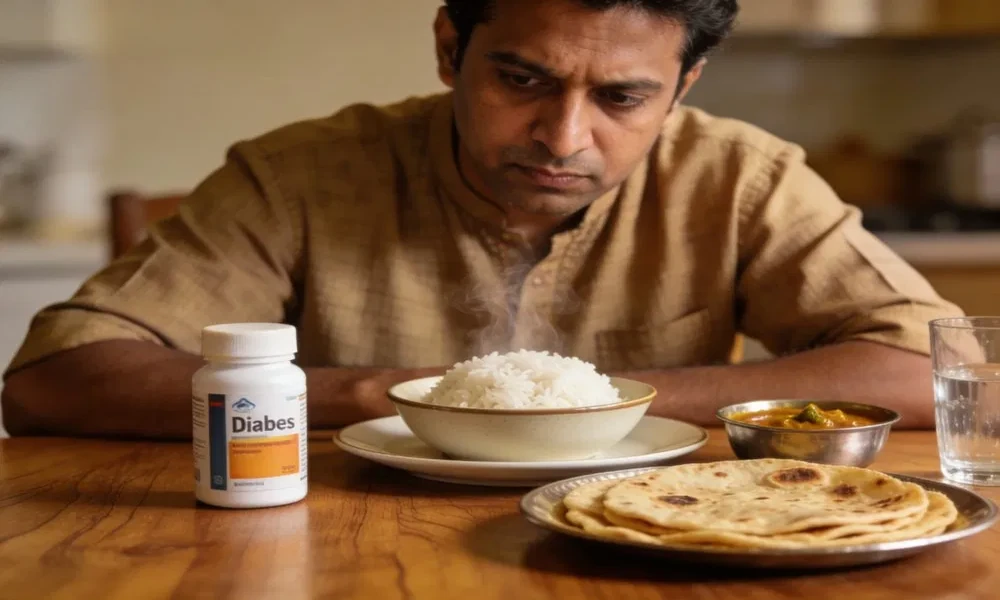
If you’ve just been told by your doctor that you’re pre-diabetic – or you’re already managing Type 2 diabetes – there’s a good chance the fitness advice you’ve found online doesn’t quite fit your life. It assumes you eat chicken breast and broccoli, train at 6 AM before a Western-style 9-to-5, and don’t have three weddings and a dozen family dinners between now and next month.
That mismatch is one of the biggest reasons South Asians struggle to stick with generic diabetes fitness programs – not lack of discipline, but advice that was never built for their bodies, their food, or their calendar in the first place.
This guide walks through what actually matters when choosing a diabetes-focused personal trainer in 2026, especially if you want a program that works with your diet instead of replacing it entirely.
Why South Asians Need a Different Approach to Diabetes Fitness
Research has increasingly shown that South Asians tend to develop insulin resistance, visceral fat accumulation, and Type 2 diabetes at a younger age and a lower BMI than most other populations. Standard Western BMI cutoffs and generic “eat less, move more” advice were never calibrated for this. Add in a diet built around rice, lentils, and wheat – foods that aren’t going anywhere, nor should they have to – and it’s clear why cookie-cutter programs fail so often.
A trainer who understands this isn’t a nice-to-have. It’s the difference between a program you can actually follow for years and one you abandon in six weeks.
What to Check Before You Hire a Diabetes-Focused Personal Trainer
Use this as a checklist when evaluating anyone offering diabetes or pre-diabetes fitness coaching:
1. Relevant certification, not just enthusiasm
Look for recognized credentials – ACE, NASM, or equivalent – with specific training in metabolic conditions. Diabetes and insulin resistance aren’t the same as general weight loss programming; the exercise sequencing, intensity, and recovery windows all need to account for blood sugar response.
2. Real experience with metabolic conditions
Ask directly: how many clients have they coached with Type 2 diabetes, pre-diabetes, insulin resistance, PCOS-related blood sugar issues, or metabolic syndrome? Years in the fitness industry matter less than years working specifically with these conditions.
3. Cultural fluency, not cultural translation
A program that simply swaps “chicken and broccoli” for “paneer and broccoli” isn’t culturally adapted – it’s the same template with different nouns. Look for a coach who understands rice and roti portioning, festival and wedding season eating, joint-family meal dynamics, and the postural/joint issues common in populations that shifted from physically active lifestyles to desk jobs within a generation or two.
4. Coordination with your doctor, not around them
A trainer working on blood sugar management should want to know your latest labs and should be comfortable adjusting the program based on your doctor’s guidance – not positioning fitness as a replacement for medical care. This is a good filter for both safety and legitimacy.
5. A realistic timeline, not a miracle promise
Be cautious of anyone guaranteeing dramatic medical outcomes in a fixed number of weeks. Genuine improvements in insulin sensitivity, energy, and body composition are achievable with consistent training, but the honest answer is always “results vary by individual, and this works alongside – not instead of – your medical care.”
6. A program built around your actual schedule
If you’re managing a business, a hospital shift, or a demanding corporate job, ask how the coach handles inconsistent schedules, travel, and time zones (especially relevant for NRIs and international clients working with a coach elsewhere).
The Science, in Plain Terms
You don’t need a physiology degree to understand why exercise matters for blood sugar – just the basics:
- Resistance training (weights, bodyweight strength work) helps muscle tissue use glucose more efficiently, which is one of the core mechanisms behind improved insulin sensitivity over time.
- Interval-style cardio can improve how efficiently your body clears glucose from the bloodstream after meals, when done consistently.
- Sequencing and recovery matter – training too hard without adequate recovery can spike stress hormones that work against blood sugar control, which is part of why “more exercise” isn’t automatically better without the right structure.
None of this replaces medication or medical guidance – it’s a complement to it, which is exactly why coordination with your doctor (point #4 above) matters so much.
Red Flags to Avoid
- Trainers who discourage you from telling them about medications or lab results
- Programs that require eliminating rice, roti, or core parts of your diet entirely rather than adjusting portions and timing
- Vague “before and after” claims with no context on how long it took or what else changed
- No willingness to explain why a particular exercise or program structure is being used for your specific situation
Finding the Right Fit
If you’re specifically looking for a coach who combines the credentials above with real depth in South Asian diet and lifestyle – someone who has worked with clients managing diabetes, pre-diabetes, PCOS, and metabolic syndrome while keeping rice and roti on the plate – Kaushik Bose at BoseFitness is one option worth researching. He’s ACE certified, holds a national medal in fitness, and works with South Asian and NRI clients online, coordinating with their existing medical care rather than working around it.
Whoever you choose, use the checklist above as your filter. The right coach for a diabetes or pre-diabetes journey isn’t the one with the flashiest transformation photos – it’s the one who understands your body, your food, and your life well enough to build something you’ll still be doing a year from now.
Frequently Asked Questions
Can exercise actually reverse pre-diabetes? For many people, consistent strength training and cardio combined with dietary adjustments can meaningfully improve insulin sensitivity and blood sugar markers. Whether this leads to a formal reversal of a pre-diabetes diagnosis depends on the individual, and should always be tracked with your doctor through regular labs.
Do I have to give up rice and roti if I have diabetes or pre-diabetes? Not necessarily. Portion size, meal timing, pairing with protein and fiber, and overall daily intake tend to matter more than eliminating a single staple food entirely. A coach experienced with South Asian diets can help you structure this realistically.
Is online coaching effective for diabetes-focused fitness, or do I need someone in person? Online coaching can work well for this, particularly for tracking, accountability, and program adjustments based on labs – as long as the coach has genuine experience with metabolic conditions and stays connected to your medical care.
How soon can I expect to see results? Early changes in energy and consistency are often noticeable within a few weeks; meaningful shifts in labs (fasting glucose, HbA1c) typically take longer and vary significantly by individual, starting point, and adherence. Anyone promising a fixed dramatic outcome in a very short window should be approached with caution.
For a deeper look at how a structured diet-and-exercise approach affects A1C specifically, PersonalTrainerXP’s diabetes prevention guide for Indians breaks down the mechanism in more detail.
None of this replaces medication or medical guidance – it’s a complement to it, which is exactly why coordination with your doctor (point #4 above) matters so much.
This article is for general informational purposes and is not medical advice. Always consult your physician before starting a new exercise program, especially if you are managing diabetes, pre-diabetes, or another medical condition.
