

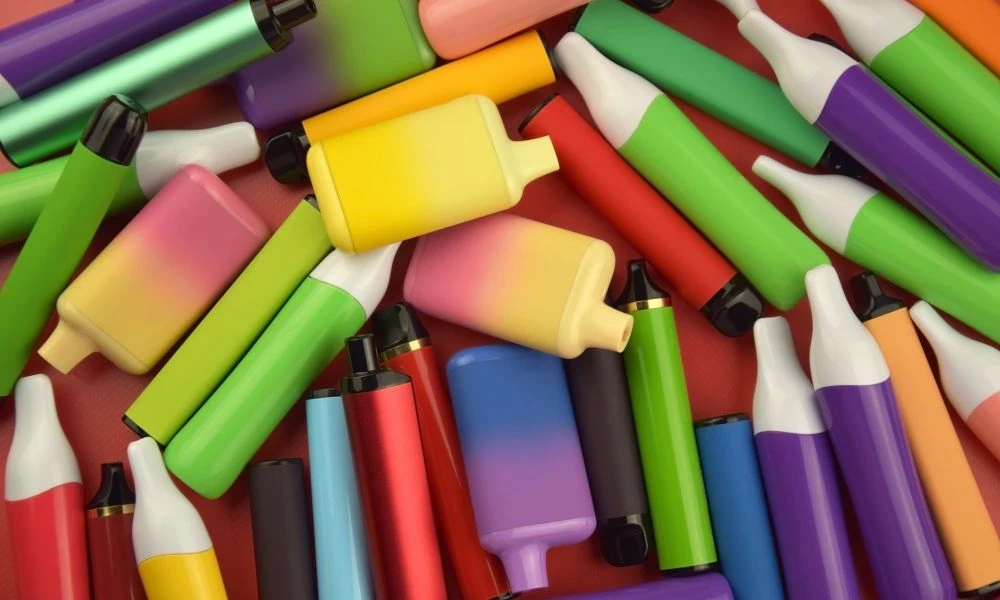
A cigalike format suits mouth-to-lung vaping because its narrow air channel creates draw resistance that pulls vapour into the mouth first before a second deliberate inhale carries it into the lungs. Channel dimensions in a cigalike are sized specifically to produce that resistance. This makes the inhale feel physically close to a cigarette draw without any adjustment from the user. Cigalike devices deliver this draw characteristic consistently across every use because the format itself produces the resistance rather than a setting the user controls.
Mouth-to-lung draw mechanics
Two stages define a mouth-to-lung inhale. Vapour enters the mouth first, sits briefly, then moves into the lungs on a second deliberate breath. That pattern is what cigarette smokers develop naturally over time, and a cigalike channel is built to support exactly that rhythm rather than encouraging a single continuous direct pull into the lungs.
Narrow channel diameter is what creates the first stage resistance. Drawing through a restricted opening requires more deliberate effort than pulling through a wide bore, and that effort is what slows vapour entry into the mouth to the pace that mouth-to-lung delivery needs. Wider airflow systems found in larger devices remove that resistance entirely, producing a draw that feels open and immediate but unfamiliar to users whose inhale pattern comes from cigarette smoking.
- Narrow channel diameter creates resistance that defines the mouth-to-lung draw feel during an inhale.
- Vapour volume per puff stays modest, matching what a cigarette produces across each individual draw.
- Two-stage inhale pattern matches the natural rhythm developed through years of cigarette smoking.
- No airflow adjustment is needed because channel dimensions are fixed at the point of manufacture.
Cartridge role in draw consistency
Each cartridge of the narrow format of the device contains a wick and coil sized to the narrow device format. Coil surface area in a cigalike cartridge stays smaller than in pod formats. This keeps vapour production per puff within a volume range that suits mouth-to-lung delivery rather than pushing toward direct inhalation volumes.
Wick draws e-liquid from the reservoir toward the coil at a rate matched to the heating element size and coil speed. During a mouth-to-lung inhale, the draw pace aligns with how quickly the wick supplies liquid and how quickly the coil converts it to vapour. Nothing in that sequence needs adjusting between draws. This is because wick rate, coil size, and channel dimensions are all sized to each other within the cartridge from the point of manufacture.
Nicotine delivery in cigalike format
Mouth-to-lung delivery carries vapour through the mouth membranes before reaching the lungs, and nicotine absorption begins at that first contact point rather than only at the lungs. Cigalike cartridges in most product ranges use nicotine salt formulations, which carry higher nicotine concentrations without the harshness that freebase nicotine produces at equivalent strengths.
Nicotine salt works particularly well in a cigalike format because the vapour volume per puff is modest. Higher concentration compensates for lower volume, keeping nicotine delivery per draw within a range that feels satisfying. This is without requiring high vapour output to achieve it. Every cartridge carries nicotine content labelled in milligrams per millilitre on the outer packaging. So that the correct concentration is selected at the point of purchase rather than after the cartridge has been attached to the battery.
Mouth-to-lung draw, modest vapour volume, and nicotine salt formulation work together in a cigalike cartridge to produce a draw experience that stays consistent across every puff from the first draw on a fresh cartridge through to the last usable puff before replacement.
